How Peptyde Bio’s purchase is leading to good things for Danforth Center—and St. Louis
Invaio Sciences acquisition of the startup has helped put St. Louis’ bio and plant sciences ecosystem on the map in Boston.
by Eric Schmid | St. Louis Magazine | April 14, 2026 at 5:45 AM
Late in 2023, Peptyde Bio achieved one of the most important milestones for a startup company: an exit.
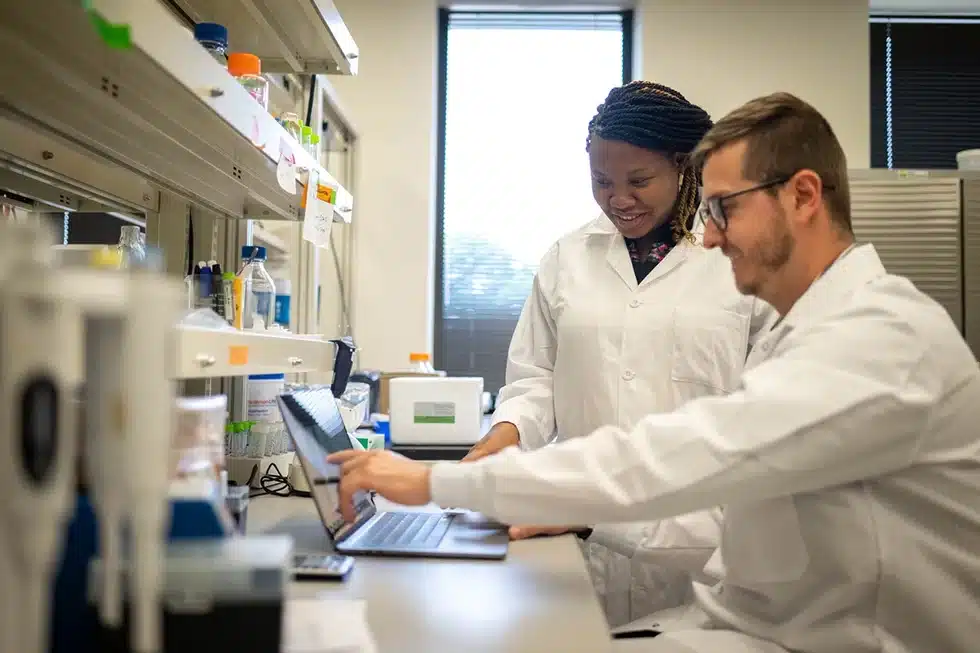
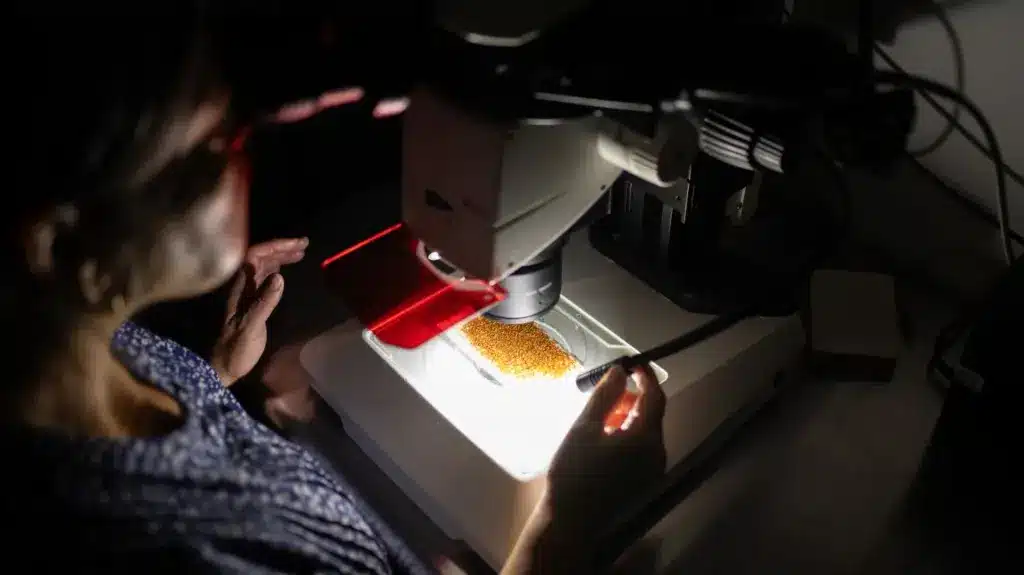
That December, the Cambridge, Massachusetts-based Inavio Sciences announced it had acquired the St. Louis company, which spun up from research Kirk Czymmek and Dilip Shah were pursuing at the Danforth Plant Science Center. The two were investigating how peptides—short chains of amino acids that can help regulate a plant’s growth, development, or defense response—could be applied to plants in a way that killed disease-causing fungi.
“We started getting some IP and showing that they were very potent and protective against plant disease,” Czymmek says. “We thought this was novel and effective, and we were a great team together.”
Czymmek and Shah sought financial support from the Danforth Center to convert their early discoveries into patents and eventually a company. Peptyde Bio became the first startup established by the Danforth Technology Company, a subsidiary of the Danforth Center formed in late 2021 with the intention of forming commercial entities out of the institution’s breakthrough science. Its exit has generated dividends not just for its early backers—but for the region’s innovation ecosystem as a whole.
CEO Tom Laurita recalls realizing early on the promising technology could prove a strong candidate for commercialization.
“I knew that a technology like peptides as antifungal is something that is already an idea out there in industry, and there were other companies working on that,” Laurita explains. “We didn’t just say, ‘Hey, this is a good idea.’ The [Danforth Technology Company] did several diligence projects; we brought in third-party experts to study the market, the competition, and how much it would take to advance this program.”
Peptyde Bio formally launched in 2022, with Laurita as its interim CEO, and quickly made strides. But Laurita says it became clear that seeing this new company through the entire commercialization process to market would require “a different type of commitment than we were able to make at the time.”

“I always could see that this might be an early acquisition because of the nature of the technology,” Laurita says.
He says the market was signaling interest in the ability to design specific peptides. That’s where a research collaboration with Inavio Sciences began—and quickly turned into more. Invaio had already raised well over $100 million, Laurita says, and had “the resources to do a lot of the things that we couldn’t do.”
He adds, “[At first] it was just two companies interacting. “But quickly it became obvious that there’s a really nice fit here, and some of the capabilities that we had developed were missing there.”
The collaboration led to Invaio scooping up the “high potential molecules” Peptyde Bio had developed and, just as importantly to Czymmek, its process of working with peptides using artificial intelligence.
“We built a large peptide database, with over 100,000 peptides that we were screening. We were using AI to classify them,” he recalls. “We were manufacturing them. We were using AI in our analysis of the data, both from the implant and in vitro assays.”
But while the acquisition might appear like a clear end to Peptyde Bio’s story, it wasn’t. Laurita says the deal’s terms came with a “transition period” where Invaio would continue to work with the Danforth Center.
“It wasn’t just the technology they were buying. They were buying the team, the collaboration, the progress that had been made, and that was a key factor to making this whole deal work,” he says.
Invaio still has a relationship with the Danforth Center in the form of a “sponsored research agreement” where the company continues to pay for the expertise of Czymmek and the lab he runs. The roughly eight-person team that worked on Peptyde Bio are still working at the Danforth Center and continuing to study plant pathogen interactions in research that’s valuable to Inavio, Czymmek says.
“Invaio did ask if some folks would move, but they really like the St. Louis area,” he says, adding that members of his lab are gaining experience working in a “startup, industrial commercialization mindset,” making them valuable to the broader St. Louis ag industry.

The dynamic where Invaio is still interfacing with St. Louis represents an important, yet sometimes underappreciated part of the startup life cycle, says David Smoller, an executive in residence with BioGenerator, a nonprofit that helps develop and invest in early stage biosciences and agricultural companies.
“Exits are not the end, they’re the new beginning,” he says.
Smoller speaks from experience, having founded and exited multiple companies over his career in biosciences. He says a startup’s successful acquisition can provide an infusion of capital back to founders and investors, but also brings connections—and, for the ecosystem, that’s a broader opportunity involving companies that may have overlooked St. Louis before scooping up innovation grown in the region.
“Big companies are buying capabilities and intellectual capital,” he says.
In the case of Peptyde Bio, Laurita says Invaio’s acquisition of the company “helped put us on the map in the Boston biotech ecosystem,” with the interest of other companies in that region now piqued by the idea of collaborating with the Danforth Center.
“Peptyde Bio was an early exit in an extremely difficult venture-backed environment right now in ag biotech,” Laurita says. “So that certainly raised some eyebrows: Wow, what are they doing right there at Danforth?”
Peptyde Bio’s exit demonstrated another important thing to his colleagues at the Danforth Center, Czymmek adds: that it was possible to successfully turn their discoveries into viable companies. Already, four other new companies have sprouted.
“It actually served as a template for some of the others down the road that it could be achievable,” Czymmek says. “Most importantly, how do we seed these things? Because I’ve been in a lot of institutions and sometimes they’re all about innovation, but there’s no mechanisms to convert a lot of times.”
It’s why Smoller is steadfast in his belief that startup exits and acquisitions are key to building out a thriving local innovation ecosystem.
“I think we don’t spend enough time talking about exits,” he says. “Every talk I’m at, someone’s talking about their startup and how much money they’re raising, but no one talks about how they’re going to recycle their money and to get to grow from a strategic point of view with a partner that acquires them. That’s a problem.”