
Budget, data centers, Rams money on tap as St. Louis Board of Aldermen starts new session

By Rachel Lippmann | St. Louis Public Radio | April 21, 2026 at 5:00 a.m. CDT
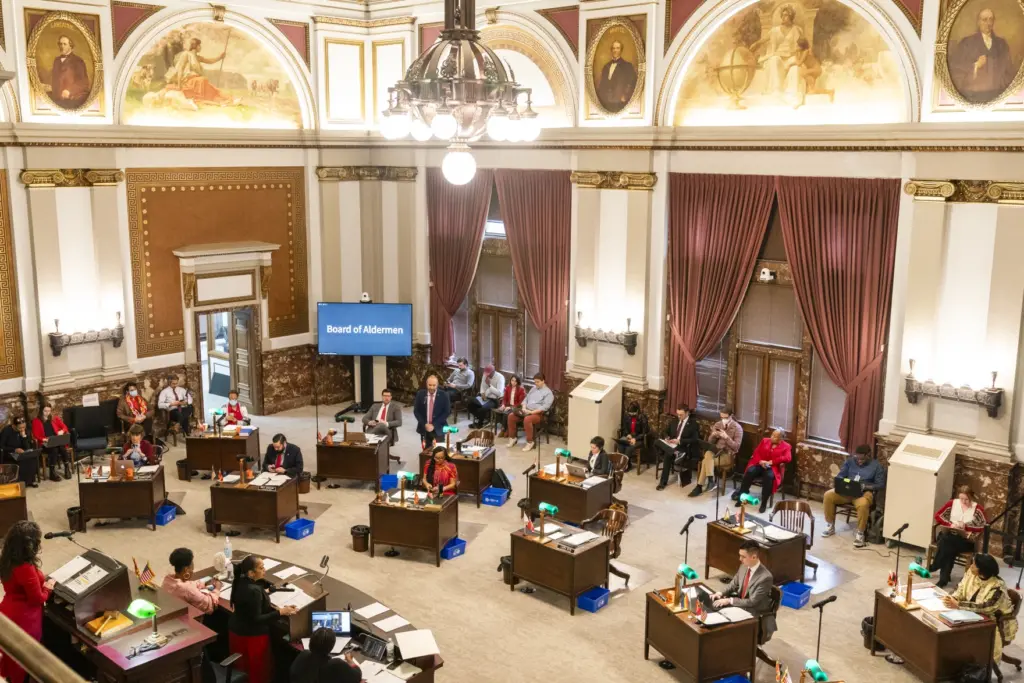
The St. Louis Board of Aldermen starts a new legislative session Tuesday that is shaping up to be one of the busiest and most complicated in recent memory.
The board will meet to take care of organizational matters such as rules for the chamber and hiring staff on the first day of the session. Bills can be introduced starting May 1.
The first board bill is always the budget. Departments regularly ask for more money than the city can spend, but the spending picture for the fiscal year that starts July 1 is even more complicated because the city is not sure how much it has to spend on the St. Louis Metropolitan Police Department.
Board President Megan Green and Mayor Cara Spencer agree that the department should get about $220 million, including 7% raises negotiated between the state-appointed Board of Police Commissioners and the St. Louis Police Officers Association. The board has certified expenses of about $250 million.
“I’ve said from the beginning that I don’t think that we should be giving them more than what is in state law,” Green said Monday. “I don’t see myself voting for something that is going to give beyond what is required.”
Spencer and Green also agree broadly on the areas to direct the remaining $255 million in Rams settlement funds – tornado recovery, downtown development and city infrastructure, including the water department.
“I think there’s not quite agreement yet on the dollar amounts for each bucket,” Green said.
But the Rams settlement money will not eliminate the need for a water rate hike of about 18% this year, or for future hikes until 2032.
“We need recurring funding in order to remain solvent for the water department,” Green said, adding that rates will still be lower for city customers than for those in St. Louis County.
Green also wants the board to make changes to its minority contracting program, including the creation of a city office that would monitor compliance with that program as well as prevailing wage laws. She also expects aldermen to consider a number of zoning matters, including regulations on data centers.