Before going all-in on AI, Alex Ward wants you to consider automation first

by Eric Schmid | St. Louis Magazine | April 23, 2026 at 5:45 AM
Amid the hype around artificial intelligence powering big productivity gains, one St. Louis-based business has a different take on how to use new technology to unlock efficiencies.
Alex Ward founded Automate My.Co with the goal of helping small businesses automate some of their most time-consuming tasks. It’s something he has personal experience with, having used automation to boost Food Pedaler, the local bike-powered restaurant delivery service he purchased in 2019.
“My first business, Food Pedaler, that’s how I taught myself how to automate,” he says.
In that process, Ward says he gained expertise with “no-code” tools, such as Zapier, that allowed him to spend less time on repetitive items and focus on bigger or more valuable goals. With Automate My.Co, he’s now consulting and building similar efficiencies for local businesses that run the gamut: a sleep technology company, a co-working space, a consumer packaged goods company, a fitness studio, and others.
“We’ll start with a discovery phase, where we talk about what the businesses day-to-day, week-to-week, and month-to-month processes look like,” Ward says. “But most of the time companies will have a project in mind of what they want to tackle first. Ideally that’s going to be something that’s largely time-consuming.”
He says there’s hardly a project that’s too big or small.
“Sometimes I have clients who act like they don’t want to burden me, where they’ll be like, ‘Hey, is it possible to do this?’ And it’s typically just a small thing that takes me minutes to set up,” he says.
A common theme is managing lead intake, where a small business might have a contact form on their website but no easy or fast way to sort through the messages it receives. Ward references a client he’s worked with for a few years who needed help triaging and managing what could be hundreds of daily inbound messages.
“I’ve set up a workflow that helps assign leads to the right point person in their internal team, and then it creates a deal, which is like an opportunity for sale, or it creates a support ticket depending on what the lead or the customer put in the contact form,” he says.

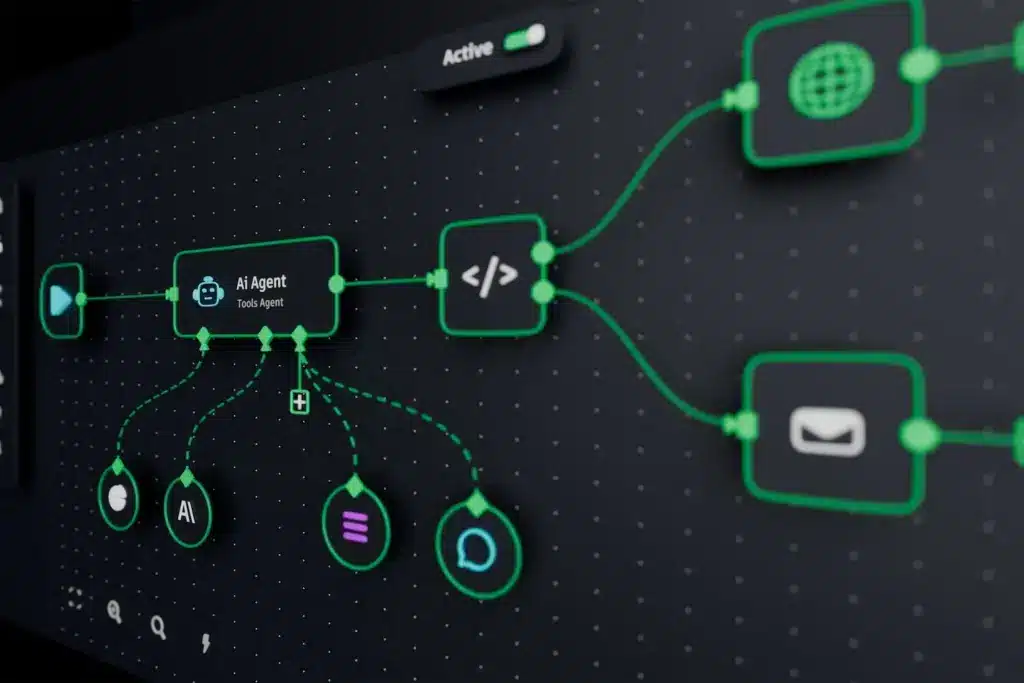
Ward says a business automation tool, such as Zapier, works a lot like a visual flow chart where an initial event (like an inbound email) triggers a cascading set of actions. He draws a clear distinction between this and what AI can do.
“AI is such a buzzword, such a hot topic right now, and it also uses a ton of energy, as most people know, and I don’t feel great about that,” he says. “So I try to use it pretty sparingly.”
That’s not to say AI doesn’t have its uses. Ward says it’s effective in “non-deterministic tasks” like reading a block of text and determining how high of a priority it is to respond immediately.
“You can’t really do that with just automation,” he says. “What I think a lot of people get wrong is using AI for very deterministic workflows and tasks where it’s just a set list of rules: If this, then step one, then two, then three, and so on. It effectively is just running a software program.”
To Ward, the business case for using these tools is evident—the faster you can respond, the more likely you are to close a deal or make a sale. Or simply eliminating a time-consuming and repetitive business task that’s no fun can free up more much needed time. One client, Ward says, meaningfully boosted productivity without needing to make more hires. And while Ward acknowledges this means a few jobs weren’t created, he argues it could mean that a small business has “that extra money set aside where you can hire a chief technology officer, or someone else in the executive board” instead.
And Ward argues it’s important for small businesses to engage with new technology, even if they feel like their processes are good enough. “As technology evolves, there’s always tools that can help them work more efficiently and save time,” he says.
To that end Ward has started a monthly Meetup of professionals interested in automating business processes and anything related to automation without endless coding. They just had their first session on Monday, which drew a half-dozen attendees.